

You’ve upgraded your internet plan. You’ve replaced the modem, added a mesh Wi-Fi system, and even contacted your provider more times than you can count — yet your connection still lags, drops, or buffers. If this sounds familiar, the real culprit may not be your service or router. The issue could be quietly hidden behind your walls: faulty Ethernet cabling.
In many Brisbane homes, especially those built before the era of smart devices and high-speed fibre, old or poorly installed Ethernet wiring can cause network issues that are easily mistaken for something else. In this article, we’ll break down the signs, causes, and professional solutions for Ethernet cable problems — without going down the risky DIY route.
Signs Your Home Ethernet Cabling Might Be Faulty
If you’re wondering how to check for a faulty Ethernet cable, here are some of the most common symptoms to look for:
- Wired devices drop their connection without warning.
- Speed tests show disappointing results despite a fast plan.
- Only specific wall ports or rooms deliver stable internet.
- Wall jacks fail to detect connected devices.
- The cabling installation appears to be messy or damaged near outlets.
Sometimes these signs are subtle and inconsistent, making it hard to tell whether the problem lies with the router, the ISP, or the cabling. In most cases, identifying the source requires proper diagnostic tools and technical know-how. This is where professional internet and networking support becomes essential — with signal tracing and socket verification tools, technicians can pinpoint issues far more accurately than through guesswork.
Common Causes of Ethernet Cable Failures in Brisbane Homes
A quick search for residential data cabling Brisbane will reveal how widespread Ethernet issues are across local homes. Most problems stem from poor installation practices or environmental wear — often hidden until connectivity becomes unreliable. Here are the most common causes:
- Renovations without licensed cablers — During home upgrades, Ethernet is often installed by non-specialists who run cables alongside electrical wiring or fail to test connections properly. This leads to unreliable performance and potential code violations.
- Substandard materials — Cheap or non-compliant cables, often used in DIY setups, degrade quickly and don’t meet performance standards. Poor shielding and weak connectors can cause frequent dropouts and slow speeds.
- Environmental damage — Brisbane’s heat, humidity, and pest activity (particularly rodents) can damage insulation or chew through cables, causing intermittent faults or complete disconnections.
- Electromagnetic interference — Cables run too close to electrical wiring may experience signal disruption. Without proper separation or shielding, even good-quality cables can underperform.
- Aging infrastructure — Homes built before 2000 often rely on outdated CAT5 or early CAT5e cabling, which isn’t suited for today’s high-speed internet. Over time, even compliant cabling deteriorates, especially if installed without future-proofing in mind.
If your home fits any of these scenarios — especially if you’ve ruled out modem, router, or software issues — it’s worth having your Ethernet cabling professionally tested. A qualified technician can pinpoint faults and recommend reliable, long-term fixes.
Why DIY Ethernet Cable Replacement Isn’t the Answer
Searching for how to replace Ethernet cables in a house will return countless DIY guides — but what they won’t tell you is how risky it can be.
Here’s why we advise against self-installation:
- Accessing wall and ceiling spaces involves safety risks and a clear understanding of internal structures.
- Inappropriate tools and techniques can damage the cable, reduce signal quality, or even cause fire hazards.
- Cable type confusion — using CAT5e where CAT6 is needed could result in bottlenecks down the line.
- Incorrect diagnosis — issues might originate in your switch, PC, or router, not the cable.
Moreover, unlicensed work on data cabling is not only risky — it’s illegal. The better approach is to engage with on-site computer repair professionals who understand the layout of Brisbane homes and can trace the fault quickly and legally.
What Professional Network Diagnosis Looks Like
When you book a technician for home network inspection or installation in Brisbane, you’re not just getting a quick patch — you’re getting a thorough analysis and a proper long-term solution.
Here’s what that involves:
- Signal tracing and endpoint testing to isolate the problem area
- Wall jack inspection to check for degraded or loose connectors
- Replacement of worn cables with compliant, high-grade cabling (usually CAT6 or CAT6a)
- Optimisation of network layout, including switches and access points for maximum coverage
This diagnostic process helps ensure the issue is fully resolved, not just masked. It also provides a chance to upgrade or futureproof your home’s infrastructure while everything’s accessible.
Types of Fixes We Commonly Provide
Every home is different, but most Ethernet issues can be resolved through one or more of the following services:
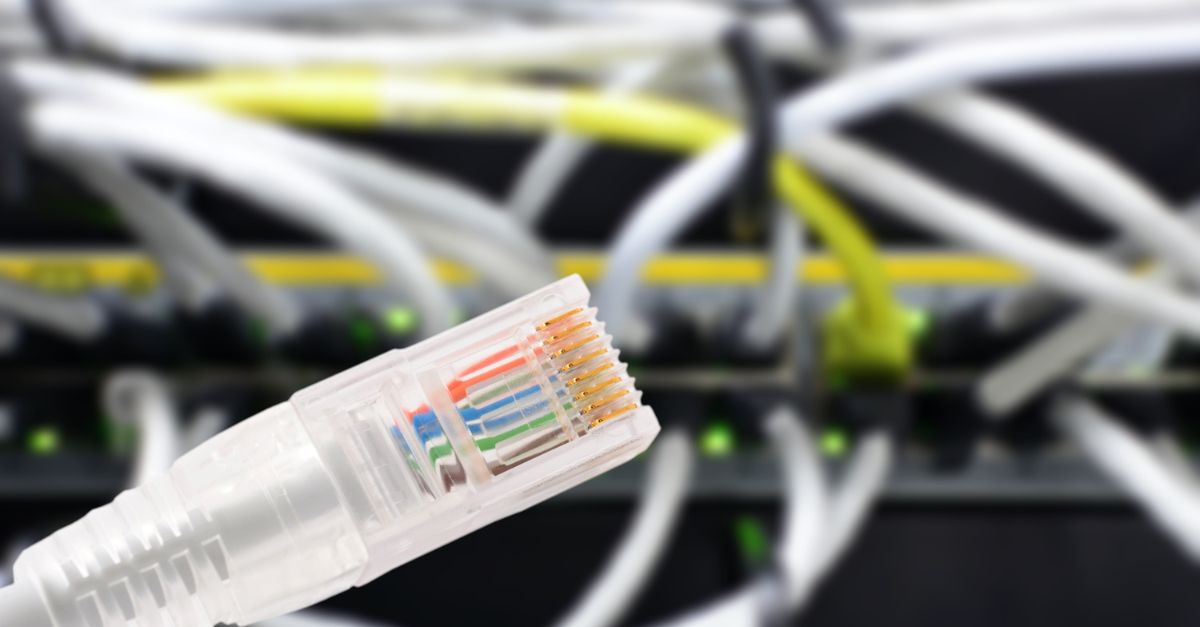
- Re-terminating RJ45 connectors where pin issues or corrosion are detected
- Replacing wall sockets that are outdated or broken
- Running new CAT5e or CAT6 cables in ceiling or wall cavities
- Upgrading to structured cabling for high-speed NBN and smart home compatibility
- Adding data points in high-usage areas like home offices, gaming rooms, or living spaces
If you’ve recently purchased or plan to purchase a new system, we also assist with custom computer setups to ensure your machine’s wired connection is running at full potential from day one.
Ethernet Cabling Recommendations for Brisbane Homes
When planning or replacing home network cabling in Brisbane, quality and planning are key. Here’s what we advise:
- Use CAT6 or better — This offers higher speeds, better shielding, and futureproofing as data demands increase.
- Place data points strategically — Avoid clustering them all in one room. Consider current and future needs (e.g., work-from-home setups).
- Avoid interference by keeping data and power cabling separate during installation.
- Work only with licensed professionals — Unlicensed data cabling can cause NBN issues and breach insurance or compliance standards.
For homes relying on cloud backup systems or remote access tools, a stable, high-speed connection is vital. Our team can also assess and support your data backup setup to ensure it functions correctly on a wired connection.
What Does It Cost to Fix Faulty Ethernet Cabling in Brisbane?
If you’re researching the cost to fix faulty home Ethernet cabling in Brisbane, here’s a general guide:
- Single outlet repairs or re-terminations may start at a few hundred dollars.
- Multiple-room rewiring projects (especially in older homes) will vary depending on complexity and access.
- Custom installations with structured cabling and multiple data points cost more but are ideal for future-proofing
Pricing depends on several factors: the number of points needing repair, whether ceilings or cavities are accessible, and the length of cable runs involved. We provide clear, upfront quotes before any work begins, so you’re never caught off guard.
For storm, electrical, or flood-related damage, we can supply an insurance quote for Ethernet repairs to help support your claim.
What Brisbane Homeowners Should Know About Cabling Regulations
Many homeowners don’t realise that internal data cabling is regulated in Australia — and for a good reason. Improper installation can lead to safety issues, service disruptions, and non-compliance with NBN standards.
Only ACMA-licensed technicians can legally install or modify Ethernet cabling.
Any fixed data cabling work — including adding ports, running cables through walls, or upgrading existing lines — must be done by a licensed cabler. Unlicensed work is not only illegal but may also be unsafe.
Cabling must comply with AS/CA S009 standards.
These national standards ensure your cabling is safe, functional, and compatible with the NBN. Non-compliant installs may result in interference, reduced speeds, or long-term reliability issues.
DIY jobs can void warranties or breach insurance
Even minor self-installed fixes can disrupt your network, void your equipment warranty, or cause issues with your home insurance — mainly if damage occurs.
Non-compliant cabling causes chronic NBN problems.
If you’ve tried new hardware or changed providers with no improvement, poor internal cabling could be to blame. A single faulty point can affect your whole network.
It is worthwhile to have your Ethernet cabling evaluated by an expert to make sure it satisfies technical and regulatory requirements if your internet is still unreliable after trying every other solution.
Still Struggling with Slow Wired Internet?
Many Brisbane residents spend months troubleshooting their routers, restarting modems, and upgrading their plans — all while the real issue sits quietly in the wall. Faulty Ethernet cabling is more common than most realise, especially in homes with ageing infrastructure or DIY renovations.
The good news is that once appropriately diagnosed, the fix is straightforward and often more affordable than endless tech support calls or hardware replacements.
Getting help from a local technician who understands both the physical and digital aspects of your home network saves you time, money, and frustration. If your Ethernet cable isn’t working — or if your wired internet is slower than it should be — now’s the time to get it checked properly.
For expert support from Brisbane-based technicians, explore our internet and networking services and schedule a diagnostic visit.